
It matters to let the mystical and sacred pull us out of ourselves in ways we don’t understand, through a lit candle and a piece of scrap paper, through a song and howling cry, through a dance or the echoing silence of being alone and letting the soul speak.
Kaitlin B. Curtice
Welcome to Day Four of Discover Your Inner Monk
So you’ve created space for silence and listening, set an intention to structure your time differently, and considered ways to think in the village way, but what about the more mystical-seeming aspects of monk life — the beautiful bells, the harmonic chanting, the incense, and the prayer? What about these daily monastic practices that seem to awaken the soul and prop the door open to mystery?
In speaking of mysticism, the philosopher Simon Critchley writes, “There are areas of human experience that allow us to push outside the sticky self towards something large, something vaster, something full of vibrancy and maybe a sheer, mad joy at the fact of life and the world.” Maybe you’ve felt this while staring up at the night sky, attending a glorious concert, or holding a newborn. For a few moments, you felt an indescribable sense of aliveness, perhaps even a sense of connection to the whole of life.
It may not be possible to schedule these kinds of transcendent experiences, but it is possible to live in ways that prepare our hearts to experience what is wondrous in life and beyond explanation. We can reject cynicism, busyness, and the cultural tendency to prioritize what’s easy to name and measure over the ineffable and awe-inspiring. Whether it’s through music, poetry, prayer, or something else, we can open the door for mystery and the full aliveness that our inner monk is longing for. When the smell of incense has disappeared and the chanting has ceased, monks often live with a heightened awareness that the world is wondrous and beyond explanation. You can too.
Today’s Practice: Seed the Ground for Wonder and Mystery
Set the stage for today’s practice by listening to this transcendent performance of one of Hildegard von Bingen’s sacred compositions from the 12th century. Hildegard of Bingen was a Benedictine abbess and mystic who was also the founder of scientific natural history in Germany, writer of medical and theological works, and composer of sacred chants that are among the most recorded in modern history. De Spiritu Sancto is performed here by the St. Stanislav Girls’ Choir of the Diocesan Classical Gymnasium, conducted by Helena Fojkar Zupančič.
Step One: Create Your Wonder Map
Complete this downloadable grid with 9 practices or activities that help you tap into a sense of wonder and mystery. Keep your list achievable (watch the moonrise), not aspirational (Climb Mt. Everest). There’s a sample grid for inspiration; create your personalized version in the blank space below. If you don’t have a printer, just take a peek at the model then build your own grid on a piece of paper.
Step Two: Aim for 3 in a Row
Make time for at least three of these in the next day or two. You may not be able to plan exactly when you’ll be swept off your feet with wonder or have an experience of the transcendent, but, like a monk, you can commit to the practices and activities that prop the door open for mystery.
Step Three: Reflect
Spend time with the following questions:
- What are the gifts of what we can’t fully understand?
- How have I been changed at a soul level by experiences of wonder or awe?
- Going forward, how do I want to nourish this aspect of my inner monk?
Scroll to the bottom of the page (or click here) to find the Community Conversation space where we invite you to share your reflections about today’s practice.
Deepening Resource
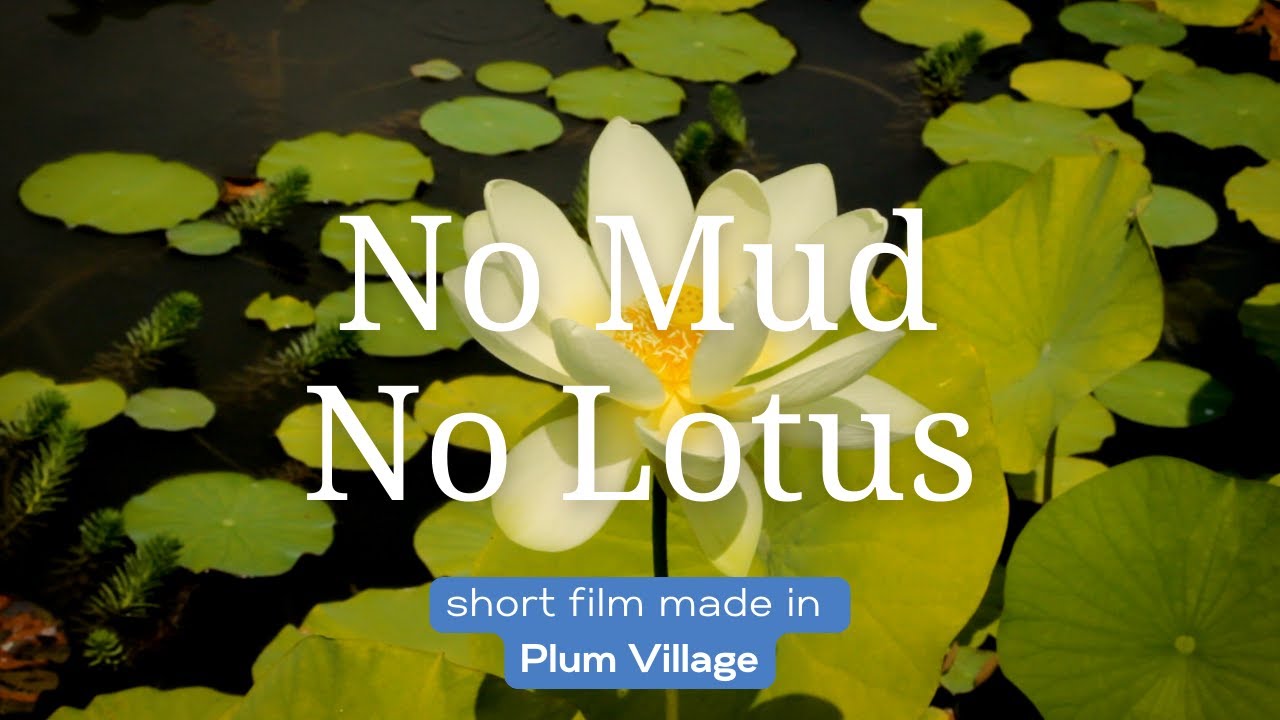
In this short film, Buddhist monk Thich Nhat Hanh reminds us that wonder and mystery are available 24 hours a day. Through mindfulness and attention, we can see and experience the wonder all around us. “Not only the lotus flower is a wonder,” he explains, “but the mud that helped produce the lotus is also a wonder. Without the mud, there would not be the lotus.”
Research Highlight
Research on awe and self-transcendence suggests that making room for experiences that exceed our ordinary frames of understanding can loosen our preoccupation with the self, deepen our sense of meaning, and increase our capacity for connection and care beyond ourselves. Across five studies by Paul Piff and colleagues, awe was associated with greater generosity, ethical decision-making, prosocial values, and helping behavior. The researchers also concluded that awe can situate people within a broader social context and increase collective concern.
Piff, Paul K., Pia Dietze, Matthew Feinberg, Daniel M. Stancato, and Dacher Keltner. “Awe, the Small Self, and Prosocial Behavior.” Journal of Personality and Social Psychology 108, no. 6 (2015): 883–899.
Photo by Erik Stine
I have a yoga teacher who is a self proclaimed lunatic. She often incorporates The moon and its various phases during our practice. She has made me more aware of the gift of a full moon. I look forward to seeing it when weather permits every Cycle and it always leaves me with a sense of all for the creator. It comforts me and makes me feel as if he looks down on us with a smile. And I smile back.
I started thinking about pearls just now and how they are formed and how they are one of my favorite substances. I am not really a rock person, but I love turquoise also. I have a 55-year-old Zuni watch band and a Zuni wedding ring. I have seen sand paintings being drawn? formed? twice in my life. One was at a Buddhist retreat in Tucson and I knew that it would be disassembled at the end of the retreat. Poof, it is gone. Mandalas like that are so rich in design and color and so patiently put together. i haven’t thought about them in years. Sacred beauty. And then I love that we can see nebulas in space that are so wondrously beautiful and mysterious.
I’ve been following the Greater Good Science Center with Dacher Keltner for years now. His research on awe and wonder is fascinating and inspiring. They put out a monthly Happiness Calendar with many great practices. My Inner Monk is drawn to these ways of tapping into life beyond self.
I’ve been following the Greater Good Science Center with Dacher Keltner for years now. His research on awe and wonder is fascinating and inspiring. They put out a monthly Happiness Calendar with many great practices. My Inner Monk is drawn to these ways of tapping into life beyond self.
The gifts that I can’t fully understand
are there,
spread before me every day . . .
in my human,
everyday mind
I can’t put them together,
but when I am tuned in
I can feel their truth deeply
and understand in a trusting,
misty, veiled way,
as I know these things
and feel the rightness of them,
but can’t explain them or put them into words.
Some hidden part of me knows.
Once I’ve ‘seen the light’,
experienced a moment of profound awe,
or had an epiphany,
I am changed forever . . .
there is no going back. ♥
Love your poem. So sweet and sensual. Look to the light. Yes, it’s just right. Ahh. . .
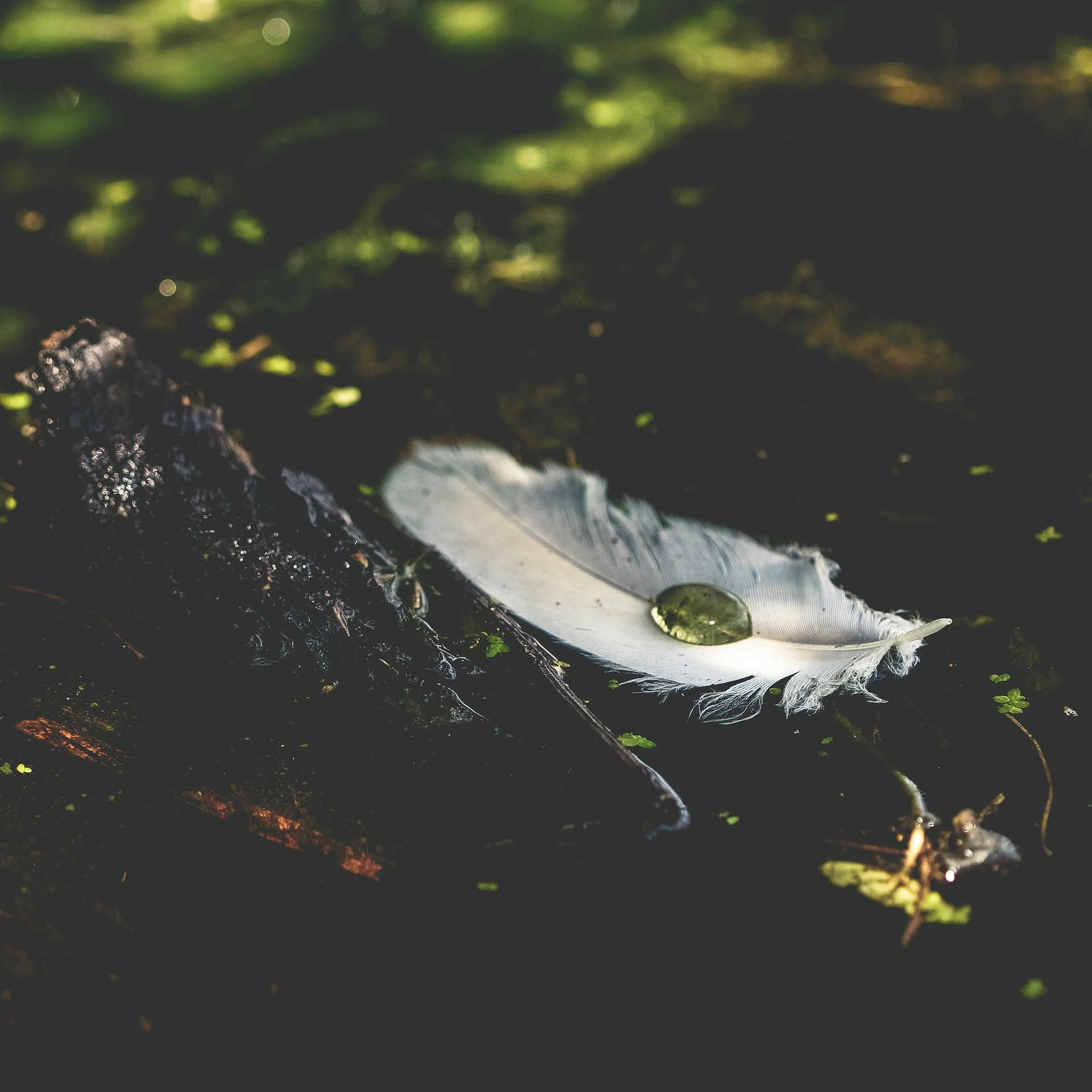
To participate with Holy requires both boldness and discernment. One time ,on my usual walk along the Arkansas River, I found a goose flight feather. As soon as I picked it up I knew it was not for me. I carried it in my hand as my dog and I continued our walk and I mulled over what to do with this feather.. The only idea that came into my mind was, find a Native American. I know that many Native Americans consider a feather to be sacred. I had a strong feeling that this feather had a mission.Do you know the first person I passes looked like she might be a Native American. So I asked her. She said she was Native American . I told her this feather is not for me. Is it for you? She agreed it might be . She took it and went to the rivers edge while I completed my walk. The next time I saw her she seemed lighter, happier. I hope that my offering of the feather brought her closer to the transcendent. I know that I felt blessed by that brief encounter.
What a lovely story by the Arkansas River. It sounds like you are in Eastern Oklahoma.
I love feathers. I used to gather them on my walks in Phoenix. Most were gray and about 4 inches long. I presume that were from the softly cooing mourning doves, the sounds of which I have known since I was a young child. The feathers were so silky to stroke.
A practice I find helpful is that of “Namaste,” “the spirit in me; recognizes the spirit in you.” I practice a slight variation. Many of the people I encounter would find it strange to raise their hands in the prayerful gesture we associate with Namaste. Regardless, I look each person in the eye and say quietly to myself, “the spirit in me, recognizes the spirit in you.”
Similarly, I find it helpful to offer variations of The Four Limitless Ones (compassion, loving kindness, joy of being, equanimity). Again, I don’t say the phrases out loud, unless there is mutual understanding. Frustrated? Feeling yourself losing focus in a conversation? Someone (someone else of course 🤡) being irritating? Try saying these or some variation of these:
May you be happy
May you be happy and know the source of happiness
May you be free of suffering
May you be free of suffering and the source of suffering
May you be filled to overflowing with the joy of being
May you dwell on the great equanimity; free from passion, aggression, and prejudice.
Of course it is equally helpful when I think/ say these phrases for myself (May I…)
These are wonderful examples,
dear Tom . . .
I use them when I practice Blessing others.
I wish these things for all–
both the positive and the negative influences in my life.
Thank you for sharing yours. ♥
I feel reassured and gratefel today that those nine seedings are becoming part of what i value and seek to practise more and more
What (surprisingly) gave me a sense of awe this morning was…um, my bowl of cereal:) I usually eat it every morning while reading the paper on my computer. Not today. I simply sat and savored it. The “it” is: some shredded wheat, Cheerios. a little homemade granola, sprinkle some cinnamon, a few banana slices and blueberries, and I pour some Kiefer over it. (as I write this, it sounds like a ridiculous amount of different things in it, but that’s what I eat each morning). So, as I ate, undistracted, I was amazed how much more I tasted and enjoyed each element of it — sweet, tart, crunchy, smooth. And then I thought and was amazed at all the people and the earth that brought it forth to my bowl. And then the bowl itself!
I’m smiling at myself as I write this, that such a mundane, simple thing could inspire awe.
Not mundane or ‘simple’ at all,
dear TTIG . . . ♥