

Because we do not rest, we lose our way. We miss the compass points that would show us where to go, we bypass the nourishment that would give us succor. We miss the quiet that would give us wisdom. We miss the joy and love born of effortless delight. Poisoned by this hypnotic belief that good things come only through unceasing determination and tireless effort, we can never truly rest. And for want of rest, our lives are in danger.
Wayne Muller
Welcome to Day Three of Live Your Life As a Sacred Pilgrimage
No matter how well someone prepares for a pilgrimage, there will be days when the journey holds more challenge than ease, more loss than gain, more grief than joy. Even on a sacred path, the pilgrim must pause in the face of bad weather, injury, or difficult news received on the trail. Parker Palmer reminds us that these difficulties can sometimes be the very things that help us find our way. He writes, “Treacherous terrain, bad weather, taking a fall, getting lost — challenges of that sort, largely beyond our control, can strip the ego of the illusion that it is in charge and make space for the true self to emerge. If that happens, the pilgrim has a better chance to find the sacred center he or she seeks.”
The challenges faced on a pilgrimage are a pretty good representation of those we each face in our own lives. As much as we want to delight in life’s gifts, there are times when our burdens make for a heavy load or it may feel that we’ve lost our way. Rather than charging forward, clinging tightly to your map and compass in the midst of the storm, sometimes the only thing to do is stop and rest. If life is a sacred pilgrimage, then you are a sacred traveler through it — deserving of care and tending, deserving of the opportunity to rest and reorient when weary. Nearly every religion has some kind of sabbath built into its rituals, affirming that to rest is a way to honor the life you’ve been given and to respect the body’s limits and the heart’s wounds.
Today’s Practice: Honor the Need for Deep Rest
For today’s practice, we invite you to reflect and act in response to the invitations in Nadine Pinede’s poem, On Safety. To set the stage, take a few minutes to read the poem; you might read it once silently and once aloud.
On Safety
by Nadine Pinede
When the storms of life
come bearing down
threatening to
lash you senseless,
seek shelter.
Find the warm
blanket you caress
like the felted fur
of your cat
curled before
a glowing hearth,
of breath that fills
both heart and earth.
Breathe.
There’s always time
to curse the darkness.
After the tears,
light a honeycomb candle
and heal your own sun.
The bridge
from sorrow to joy
may seem to vanish
in the flood,
but who says you
can’t join those
who cross over,
with a single
braided rope
of gratitude.
Once you’re familiar with the poem, try the following practice as a way to rest and reorient when weary.
Step One: Seek Shelter
Choose a form of shelter that you need right now — some way of slowing down and allowing yourself to rest. Using the following list for inspiration, take one small step to give your heart shelter and rest.
- Take a nap, or simply close your eyes for 5 full minutes and breathe
- Cancel a plan that is one thing too many
- Pause your news intake or stay off social media for the day
Step Two: Heal Your Own Sun
The poet reminds us that we have resources to lean on, ways to “heal our own sun.” Choose one simple action, akin to the poet’s candle lighting, that you can do today that feels healing and nourishing. Whereas the first step of the practice was about going inward for rest, this step is about leaning into your resources. Consider the following for inspiration:
- Reach out to a trusted friend
- Return to a book you cherish
- Make time for meditation or prayer
- Eat something nourishing
Step Three: Braid a Rope of Gratitude
The last lines of the poem suggest that a bridge between sorrow and joy can be made by “braiding a rope of gratitude.”
- If you were to braid a rope of gratitude to bridge your sorrows and joys, your exhaustion and your fortitude, what would constitute the three strands of the braid? Asked differently, What are three things, people, or qualities you’re grateful for which — combined — provide the strength you need to move forward when tired and weary?
Step Four: Reflect
Once you’ve experimented with the practice steps above, take a few moments to consider the following:
- Looking at the road ahead, in what ways do you want to expand your capacity to rest and reorient when weary?
- In what ways is rest an essential aspect of living gratefully?
Scroll to the bottom of the page (or click here) to find the Community Conversation space where we invite you to share your reflections about today’s practice.
Deepening Resource
Give yourself the gift of 2 minutes of rest with this gorgeous piece of music by Melanie DeMore, performed with Julie Wolf. The music itself is an invitation to close your eyes, take a few deep breaths, and allow yourself to rest. The lyrics are a reminder to receive whatever light is being offered when we’re weary and, as DeMore sings, to “go slow dear one, don’t hurry.”
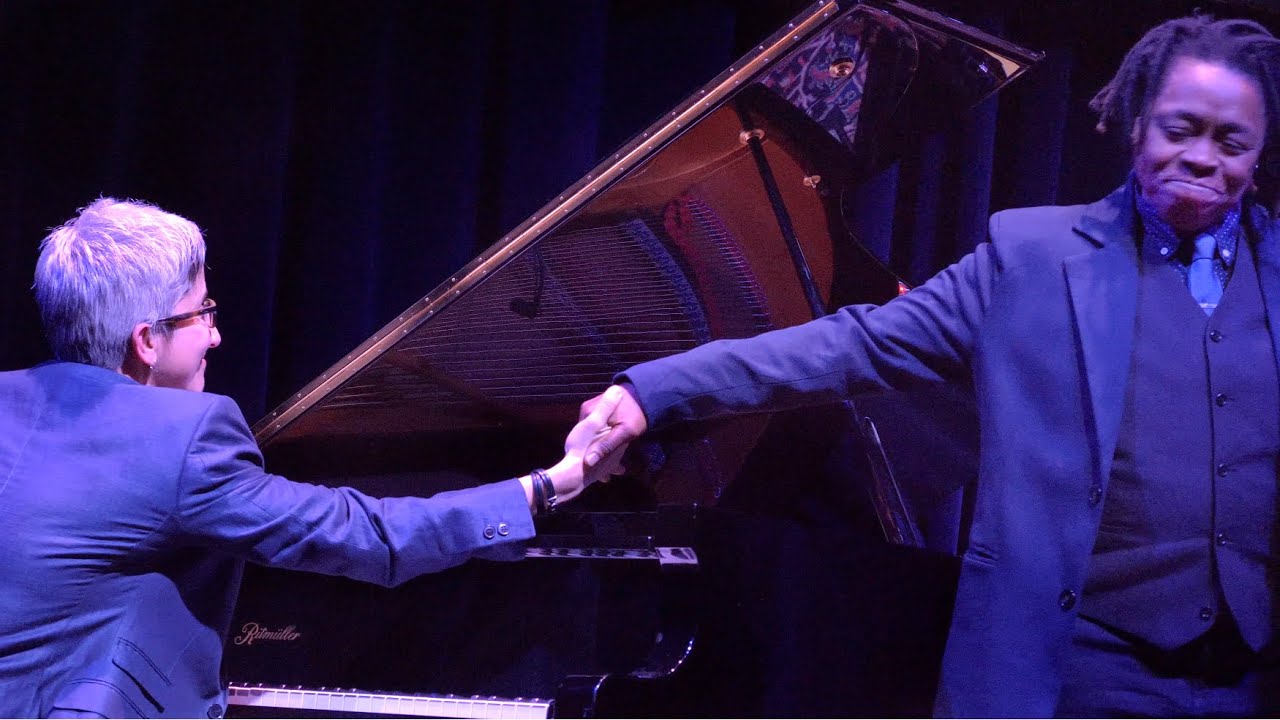
Sending You Light by Melanie DeMore performed with Julie Wolf
Research Highlight
In this fascinating article, Wynne Parry explains the deep rest research by Drs. Alexandra Crossell and Elissa Epel at the University of California San Francisco. Their work demonstrates the ways that “deep rest” activities open the door to “a psychological and physiological state during which our bodies can recover on a cellular level.” Practices that quiet our minds, invite contemplation, or connect us with others through movement or ritual lead to deep rest that is distinct from both sleep and just relaxing. “Deep rest is something our bodies need and deserve,” says Epel, a professor of psychiatry and vice chair of psychology. “With it, we improve our chances for healthy longevity.”
New Study Explores the Transformative Power of Deep Rest, Wynne Parry
Photo by Nik Demidko
Loved the music….I am sending you light…it touched my soul.
Thank you for sharing so meaningful ressources. I’ve shared the beautiful video Sending You Light to a friend who needs it a lot. The timing was perfect. Many blessings. I’m very grateful for this pathway.
On this pilgrimage I brought Br.David’s “99 Blessings” book…I haven’t read it in a long time and chose it when I went looking for things to bring…I am opening it randomly each day…today’s reading was gratitude for perfection of the unfinished…and then I came here…to rest and renew the unfinished journey! Perfection!
I really liked the poem…the line “there’s always time to curse the darkness”…especially!…and I just listened to Sending You Light…I hope everyone listened!
Loved the blessing: Sending You Light. Thank you for sharing this. I find rest an important and needed part of my daily practice. I am grateful for this gift.
Many vagaries in life led me to acquire higher knowledge and a better understanding of myself, work and achievement. People who helped me such as family members, friends and spiritual directors gave me courage and love that I am very grateful for. I credit most twists and turns on my path to a philosophy about a “road less traveled”. (Based on the 1978 book by M Scott Peck, psychiatrist) I’m grateful for my fascination and courage to follow that path. It has been accommodating in both achievement and restoration. Peace.
This was a wonderful practice for me. A reminder, to listen to my body more (and mind), to retreat. The music prompt was incredible, assuring, reassuring, reminding me that He is always with me/us. Faced with important challenges for the day, I immediately canceled my planned volunteer activities for this evening. I am always primed to say ‘Yes’ to the point of overextension and exhaustion. I need to better manage my commitments to leave enough time for Body, Mind, and Spirit to connect.
Each of these three days have paid incredible benefits to me. Thinking I was relatively ‘self-aware’, I wonder how I lose my awareness of the need for more ‘self-care’. The pilgrimage has been a great reminder of the need to have a disciplined practice to bring me home!
Rest is the hardest thing for me to do — or to let happen, I’m not even sure. My strong points are planning and organization and being “productive,” so I’m not sure how to enjoy rest. Even while listening to the beautiful song above, I felt the need to get up and fix tea and put clothes in the dryer. The compass on Day #1 was insightful for me because I no longer have the true north I thought I had. My husband of 40 years passed away suddenly about two months ago, and so the future I envisioned is blank now. At first it felt that my life had ended too. But, I’m alive and healthy, and a new pilgrimage is ahead of me. When we traveled together, he always laughed at my well-planned itinerary, which I know he enjoyed dismantling. The dismantled itinerary was always so much more fun for both of us. He has really dismantled it now!
I realize that rest is where I might hear my new true north calling me, but my challenge is to learn how to truly rest and listen. The Tolstoy story, “Two Old Men” is very insightful — our end goal is not always what we think it is. Thank you for this course. Lisa
Thank you for sharing as you did. You have a very good reason to no longer have north star. 40 years is a very long time. Be gentle on yourself in terms of demanding a ‘quick’ reorientation. Take a breath, take many breaths. And resting can also mean simply going for a walk, occupying yourself with something that allows you to space out a bit. For me, I am amazed with the ideas and thoughts that occur to me when I’m doing some ‘idle work’.
Blessings to you and good luck with your pilgrimage.
Bob
Such a deeply touching song sung directly to the heart. Thank you dearly for this gift. It moves me to tears. I will follow your suggestions and find rest in added meditation today and in returning to a book I cherish. What an utterly beautiful song and intensely moving singing by Melanie deMore and Julie Wolf, breaking open. Deeply grateful for your offering this jewel.
To be able to cross over from sorrow to joy, from weariness to fortitude, deep gratefulness for having been blessed with much support and experiencing Light even in the darkest darkness is there. Gratefulness itself is part of the Light for which I can take decision for and to remember the deep wish to serve others like it has been freely given to me, heart open. Deeply grateful for the kindred hearts walking together with me, my dear friends, loved ones, my teacher and the sangha and the ones who share the daily questions. We are really walking each other home, as Ram Dass once stated, which includes humbly obeying to the Light also. Being deeply grateful also for having been led from almost hopelessness to having found back to hope and from lost faith to being faithful is a gift of sorts also. May this rope help to bridge moments of weary and lead back to joy and peace of heart for all beings. What will eternally last is His Light and Love.
The song was an ‘over-the-top’ experience for me. I listened to it while I was lying down, and it transported me to a deep place. A life-affirming place.
Thank you for this beautiful reflection. It added to the insights of today’s practice.
Oh wow. I felt so exhausted today so I had to take a break. This message came at the right time for me. 🙂
Yes same for me. Doing so many things at a time. This is a good reminder to slow down.
Today was a great affirmation and lesson for me. Pushing through when I am tired or just ready to do nothing is my fall back. What a gift this is.