

I have traveled with a sense of openness and adventure and curiosity. I have traveled, not just with my body but with my mind and heart, my soul and my spirit. I have been part of a ‘moveable community’ of fellow pilgrims who bear witness to each other’s journeys. I recognize in the faces of other pilgrims the state of my own soul: I know, deep in the deepest place of knowing, that even though I still am who I am, I have been changed and transformed and will never again be the same.
Elizabeth Kaeton
Welcome to Day Five of Live Your Life As a Sacred Pilgrimage
It’s hard to imagine returning from a long pilgrimage unchanged. Having traveled far, encountered unexpected joys, and mustered courage when faced with challenges, the person who began the quest is undoubtedly transformed. Some changes may be obvious and others revealed slowly over time, initially unrecognized even by the traveler, yet what a pilgrim discovers and learns about themselves may ultimately be the most important part of the journey.
The 15th century mystic Kabir wrote: “I felt in need of a great pilgrimage, so I sat still for three days…,” leaving us with an intriguing koan and the suggestion that the most important pilgrimage we make is the one within our own hearts and minds. Like walking a labyrinth, living your life as a sacred pilgrimage invites you to the center of your being. It is simultaneously a journey that takes you out into the world but also more deeply and meaningfully into yourself.
This depends, of course, on maintaining the heart of a seeker and on remembering that your one unique life — this moment, tomorrow, and the next day — are worthy of approaching as a sacred pilgrimage. Give thanks, set your compass, gather your guides, savor the beauty, rest when weary, summon courage when needed, connect with others, and find yourself, ultimately, at home.
Today’s Practice: Commit to Your Sacred Pilgrimage
Set the stage for today’s practice by watching this 4-minute video, in which Chet Raymo — who was a longtime professor, naturalist, and Boston Globe columnist — describes the one-mile daily walk to work that he made for nearly forty years. He shares, “Any path, anywhere, tended to with care becomes what I call ‘the path’… It has, I think, over the years kept me alive to the wonder of the world, kept my sense of awe alive, my sense of reverence…” Dr. Raymo’s approach to his daily commute offers a lovely model for how each of us can turn a chosen aspect of our lives into a sacred pilgrimage.
Step One: Choose Your Focus
Rather than trying to consider your whole life all at once, choose one aspect of your life that, going forward, would benefit from approaching it as a sacred pilgrimage — an intentional journey that grows more meaningful step by step, day by day, year by year. Here are a few suggestions to get started:
- The process of aging, parenting, partnering, or friending
- Your professional or spiritual journey
- A creative act you’re committed to
Step Two: Create a Plan
Use the questions below to make your plan for approaching this aspect of your life as a sacred pilgrimage. Consider writing your answers in a notebook, adding them to your compass from day one, or sketching something to remind you of the journey you’re embarking on.
- What are your intentions and hopes for approaching this aspect of your life as a sacred pilgrimage?
- Who and what will you turn to for guidance, inspiration, and support along the way?
- How will you remain open to unexpected gifts and courageous in the face of challenges?
- When you’re tired, how will you seek shelter and rest?
- How do you hope to shine light for someone else?
Step Three: Commit
To support your sacred pilgrimage, create a tangible reminder of your new approach to this aspect of your life. A few suggestions:
- Place your written answers to the questions above in a place you’ll see them regularly
- Print out your compass from day one, add any additional intentions to it, and post it visibly
- Select an object — a stone, a photograph, a drawing, a personal treasure — that you can carry with you or display as a visual reminder that you’re on a sacred pilgrimage
Step Four: Reflect
As you continue your sacred pilgrimage, consider the following questions:
- What are you learning about yourself? How are you changing?
- How can you begin to approach the entirety of your life as a sacred pilgrimage, not just this one aspect of life?
- Ultimately, how is living your life as a sacred pilgrimage returning you home, more fully, to yourself?
Living Your Life As a Sacred Pilgrimage Is an Ongoing Journey
Annie Dillard reminds us that “how we spend our days is, of course, how we spend our lives.” If we want to live life as a sacred pilgrimage, we have to begin to live our days as such. As you come to the close of the Pathway, consider the following:
- What is one daily shift you can make starting today that will contribute to the sacred pilgrimage of your life?
- Imagine your life three months from now. What is one new thing you’d like to be able to say about your life as a result of approaching it as a sacred pilgrimage?
Scroll to the bottom of the page (or click here) to find the Community Conversation space where we invite you to share your reflections about today’s practice and the Pathway overall.
Deepening Resource
In her poem For Those Who Have Far to Travel, Jan Richardson offers words of wisdom and a blessing as we each make our way on the sacred pilgrimage of our lives. She reminds us to “heed the signposts of intuition and dream,” “to press on beyond what would tempt you from the way,” and “to offer the gift most needed — the gift that only you can give.”
For Those Who Have Far to Travel by Jan Richardson
Research Highlight
Living your life as a sacred pilgrimage that returns you home to yourself invites ongoing reflection. As part of your journey, remember the benefits of reflecting on what you’re grateful for. Research by Dr. Sarah Schnitker and Dr. Jo-Ann Tsang at Baylor University demonstrates that one of the ways we move from gratitude as an activity to gratitude as an emotional state is through intentional reflection. Without a reflective practice, we return quickly to whatever our baseline level of happiness is, despite the effects of positive or negative life events. They explain “Through intentional deep reflection of what we are grateful for” that we can move past this cycle and “into a positive emotional state of gratitude.” In other words, it’s good to make the sacred pilgrimage of your life a grateful one!
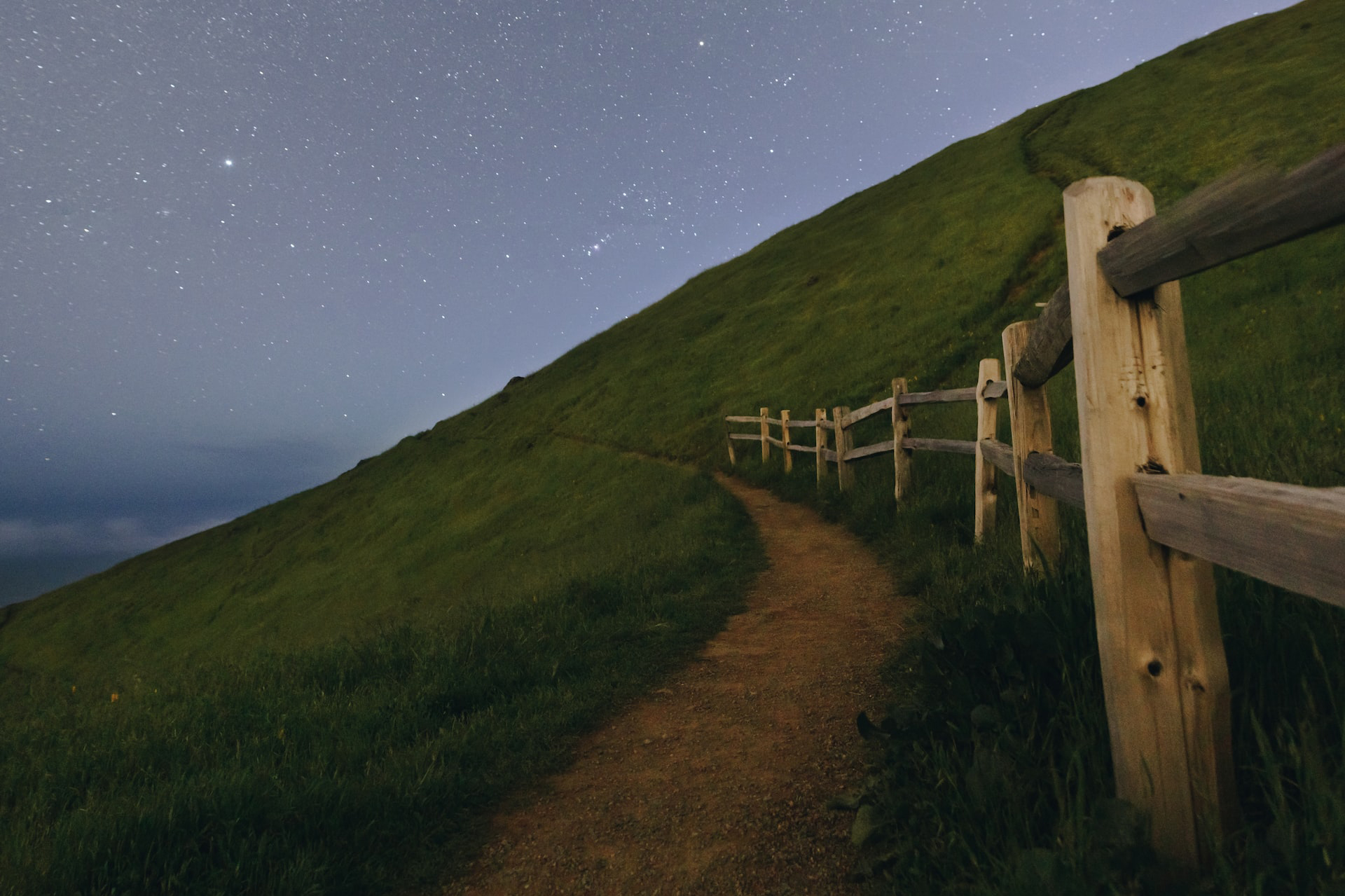
Photo by Simon Berger
I am inspired by others who have written about their pilgrimage. I have been keeping a Gratitude Journal for years. It’s a great reminder of everything in life that I am blessed with…I also add a Prayer List which helps me send love and prayers for friends, family and the world at large.
I enjoyed reflecting on my intentions. Especially helpful was considering the practices I will rely on. I’ve read the book by Kristi Nelson from A Network for Grateful Living. Her book, Wake Up Grateful, inspired me to reflect on one of the five principles of gratitude or perspective that she outlined in her book. So those guides will be part of my plan as well as focusing on one person or special gift during the day and journaling about this at end of day. I think the consistent practice of Centering Prayer and Daily Mass will also aid in practices to feed me and encourage the pilgrimage we are all on. Certain prayers that also express my creeds I will continue to keep in my memory so that I do not forget my guidelines. I appreciate being able to share these thoughts.
Kristi’s book has been an enormous help since I read it a couple of years ago. I can always go back and re-read the many prompts and be inspired yet more deeply. It seems (for me) that I am always standing on the shoulders of the events of the most recent days, and my insights just go deeper and deeper. And I laugh at myself as I conclude that ‘self-awareness’ is a fleeting thing! Enjoy!
I have found this pilgrimage/process to be really valuable, really helpful. It made me pause more, to being more intentional, to use my practices in a more directed way. I particularly liked the encouragement to pick an area for focus on day Five. I have chosen several, and it will not be a burden to who I am right now. I will be focusing on partnering, my professional and spiritual journey, and my creative commitments to create and leave a ‘legacy of light’ wherever I am. I actually see them as ‘one’. I see them as being a call to be more self-aware, to noticing energy shifts, to being compassionately authentic, to acting and communicating in a way that is appropriate to the moment. I want more joy in my life and in the lives of the people in my life. I see the path ahead pretty clearly.
I want to thank those on this pilgrimage this past week. The writings inspired me on multiple levels. I wish us all a wonderful journey in the days and weeks ahead.
Blessings to all.
Thank you for sharing your thoughts. It helps to find other words to illuminate what we are learning
To honor my true north as a sacred pilgrimage, I intend to follow a spiritual path by meditating, walking a labyrinth, hugging my dog frequently, adding a stone to my cairn, and daily writing a journal. I hope to broaden my social activities by sharing extra food with neighbors, and hosting an occasional afternoon coffee. It is important to maintain mental clarity, spiritual grounding, and to honor my relationship with the divine.
I am grateful for the physical and mental abilities I have in my elder years to have the privilege of a pilgrimage such as I seek.
I am changing in going for “first things first”, which for the moment being is opening up to kindred hearts in order to offer my piece of experience to the whole of exchanging and contributions, of which a part is t0 increasing meditation and space for stillness and rest, for creativity and music and joy. But the biggest part / necessity is to show up more, to let go of my shyness and bashfulness and shame and social phobia and just be there as I am, lt is as simple as that in order to be back to belonging. and trust. This pilgrimage showed to me the prison I need to leave through the open doors, and whatever will be will be. With a bit of a shaky state, I will go onward and lead my life as a pilgrimage, possibly spiritual, but surely as a compassionate and caring human being, and will do my share of what I can to pass on to others, deeply grateful to support and help and to be present to others in ways and with the help of His Light and Love of what I had the chance and luck to have received.
I’ve not been diligent in keeping a Gratitude Journal and am intrigued by the research that focuses on the giver, to include finding ways to thank him/her/it. This is something I will incorporate into my daily practice, as I can already feel how this might lead not only to my feeling more gratitude, but the recipient of my expression of gratitude will feel a boost as well. That type of ripple effect has to be good for the world!
I also want to incorporate journaling into my practices. I will pray for your success. Please pray for me. This will be difficult to add, to find the time and be consistent.
I also want to incorporate journaling into my practices. I will pray for your success. Please pray for me. This will be difficult to add, to find the time and be consistent.
I also want to incorporate journaling into my practices. I will pray for your success. Please pray for me. This will be difficult to add, to find the time and be consistent.