

Pilgrimage is a creative act, like a work of art, with you as both the artist and the canvas… Think carefully about your intention. Be your best you. Go slowly. Improve along the way. Be natural. Give gifts and be grateful.
Will Parsons, British Pilgrimage Trust
Welcome to Day One of Live Your Life As a Sacred Pilgrimage
A sacred pilgrimage is made with intention and preparation. Whether the destination is a religious site or mountaintop, historical landmark or ancestral homeland, pilgrimage emerges from some kind of yearning — for meaning-making, healing, soul-searching, or adventure. It includes an openness to change, perhaps even a longing for it. Even though the one making the journey knows that the road will undoubtedly shift beneath their feet, a pilgrimage is most often begun with a specific destination in mind to carry out the intention.
In a similar way, we each have hopes and goals for ourselves that evolve throughout the decades of our lives — relationships we want to build, work we want to contribute, ways we want to be. The invitation of this Pathway is to envision the journey of your life as its own unique sacred pilgrimage. Doing so begins with taking time to reset your compass to your own true north — to reconnect with or define anew where you’re headed. And once you’re oriented, you can bring to mind the guides you need for the sacred pilgrimage of your life: a practice you rely on, the companion whose wisdom nourishes you, the music that lifts your spirits, a treasured stone or seashell that grounds you, the book that helps you remember what matters.
On this first day of the Pathway, we invite you to ask the same questions of your life that a pilgrim might ask when planning a sacred journey:
- What are my intentions, and what am I seeking?
- What will I bring with me to guide my way?
Today’s Practice: Build a Compass for Your Pilgrimage
To set the stage for today’s practice, take inspiration from the group of Buddhist monks who recently completed a 2300-mile pilgrimage of peace from Ft. Worth, Texas to Washington, D.C. As you learn about their journey, consider what you want your own steps through life to stand for and inspire — and what constitutes your figurative safety vehicle or walking stick.
Once you’ve had a chance to learn about the monks’ pilgrimage, use this printable compass (or simply sketch one on a piece of paper) to reflect on the direction of your own life’s journey.
Step One: Name Your Hopes and Intentions
At the top of the page, your north, name your hopes and intentions for the next phase of your life’s journey. What are you traveling toward? This could include anything from healing to professional aspiration to a quality of being that you want to bring forth.
Step Two: Identify What You’re Leaving Behind
At the bottom of the page, list those things you are leaving behind, whether out of loss or because they are no longer your destination. Pause here to give thanks for what you’ve experienced so far on your journey, even if the direction of your life has changed. Take a moment to acknowledge the ways that the orientation of your compass may have shifted over time.
Step Three: Choose Touchstones to Guide Your Way
Imagine that what lies to the east and west are the touchstones that will guide your way and help maintain the path. List 3 to 5 things that are essential for your journey — a practice or friend, sacred text or music, even a personal treasure you will carry in your pocket that will remind you where you’re headed. If the road ahead is a sacred pilgrimage, we must gather our guides with care. What are yours?
Step Four: Reflect
- What was affirmed, revealed, or clarified by sketching this compass?
- How would you describe the figurative pilgrimage you’re traveling now or that awaits you?
Scroll to the bottom of the page (or click here) to find the Community Conversation space where we invite you to share your reflections about today’s practice.
Deepening Resource
In this 4-minute film featuring the words of poet David Whyte and music by Owen Ó Súilleabháin, the poet walks out across the highlands as if beginning a pilgrimage. Along the way, he blesses and gives thanks for sound and light, the way they guide him and allow him to “look at the face of the world.” The poet John O’Donohue writes, “A journey can become a sacred thing: / Make sure, before you go, / To take the time / To bless your going forth.” What blessing are you requesting for the pilgrimage of your life right now? What blessing are you offering?
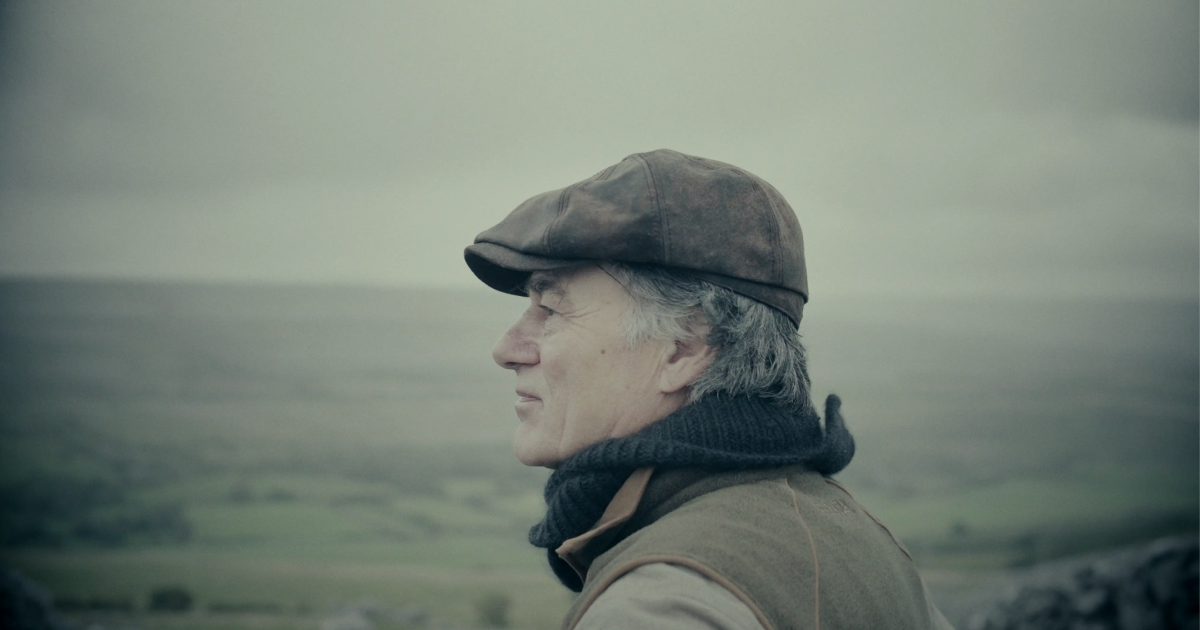
Blessings by Andrew Hinton with David Whyte and Owen Ó Súilleabháin
Research Highlight
Dr. Jennice Vilhauer of Emory University highlights the ways that thinking about the direction of our lives can make our lives better in the present. It’s a way of using our “imagination as a tool for motivation, resilience, and well-being.” By doing so, we make choices we feel proud of; increase our sense of purpose, clarity, and inner peace; and remind ourselves that we have the power to create the life we want for ourselves. As you’re considering the sacred pilgrimage of your life, consider Dr. Vilhauer’s reminder: “The present is not just where you are — it’s the arrival point of the future you once imagined.”
Why Thinking about the Future Makes Your Life Better Now, Jennice Vilauer, Ph.D.
Photo by Jordan Madrid
Here I am just now finishing Day 1, deliberately. I have a tendency to want to DO MORE – read another book, take another course, work another puzzle, write another to do list, rushing through my day without savoring, onward to the next thing. i want to leave hurry behind and let the Spirit REST me, enjoying my moments.
For the next phase or chapter I want to be healthy and active, travel with friends and my touchstones are candles, my joy/happiness (crazy Lace Jasper) bracelet, my brother, my BFF Judy. I am leaving behind fear, worries and loneliness. I am so GRATEFUL for so many wonderful p[eople and things in my life.
I hadn’t realized until I started this “pilgrimage” today how very many things in my entire life…way back to infanthood – that I need to be grateful for!
Thank you for these prompts. I have been on this path for many years. These prompts bring me back to a Spiritual Awakening many years ago. I put it aside and now plan on going deeper with what I begin writing years ago.
“The Art of Loving The Art Of Being, The Prison of Our Mind”
My true North is Loving Kindness…..
Nature is a source of great healing.
The earth is my home.
My intentions are to go slow and appreciate the moments.
It was astonishing to realize that it is already clear and decided insie of me that life´s journey is heading towards the intention to help kindred hearts onward on a deeper level than it was possible so far, towards less suffering, more joyful days, possibly peace and that possibly I will have to leave behind my former professional tools to be able to serve this well. It became clear also that expectations are a clear hinderance while keeping hope and trust is of support. I really appreciated the moments of appreciating what will be left behind and being so very grateful that it has been in my life in a wonderful way, having been able to live a life I was allowed to choose from my heart which also served others well, and for the appreciation for the many difficulties on my new path I had to master to arrive to this point where I am now and to follow this direction with all my heart. My touchstones, if I translated this word right, will be Buddha, Meditation, Gratefulness for the path and for all beings, my teacher and related teachers, songs among others will be Bob Marley´s “One Love, One Heart” and the Maha Mrityunyaya Mantra,. I am deeply grateful. Wishing you all a journey full of revelations, wonder and beauty.
My North: Living each day more mindfully. Not looking at getting things done, but really getting into the doing and slowing that down.
Touchstones to take along: Listening to Inspiring music such as Brooke Medicine Eagle Songs like “Spirit that Moves in all Things”; Continuing meditation, Tai Chi, mindfully dancing, Sunrise plunges into the river.
Yes, I agree this also is great for start of Lenten season. I haven’t eaten all day (fasted) for a great beginning and an interesting way to be mindful of how often my mind goes to food or ways to distract myself from just being with what is.
I appreciate that this pathway occurs at the beginning of Lent.
I have to remember to keep this as a pilgrimage and gently return when I turn it into an accomplishment.
Northward on my compass: I’m looking for an experience of being alive. Wake up. It’s here. One practice I know I can do in the next days is to listen to a song each day of this pilgrimage. I want to leave behind the dull din of it isn’t supposed to be happening this way.
Hello all,
I’m really enjoying reading the reflections shared so far on this first day of the Pathway. Thank you so much.
If you haven’t posted yet and are inclined to share, please remember that your words may be exactly what someone else needs!
And don’t worry if you’re not posting on the first day of the Pathway; this reflection area is open all week.
So glad you’re here with us.
I found that as thought about my path forward, the ideas were already there but not being acted upon. I’d like to integrate my touchstones into my daily life more, instead just thinking “oh, I should really do that” (ie: listen to music more, read a poem or two everyday and such). I now have a daily meditation practice and that took a long time to achieve but the benefits are many. I am retired and I spend a lot of time in nature, in the woods, hiking and snowshoeing, and I do find a sense of quiet contentment there. So I hope to move forward into a kind of enduring peace and equanimity in myself and a sense of hope and maybe also project that out into the world. I have work to do.
What has occurred to me recently is that Peace (together with The Joy of Being) is the “pearl of great price” that is worth more than anything else I might ever attain or acquire. I have great respect and admiration for all those who, like the Buddhist monks in the video, do what they can, in their own way, to find peace within themselves so that they can bring peace to others.
My True North is Peace. I am trying to be much more intentional about walking in that direction.
There is much I carry that prevents me from being at peace. I am grateful whenever I become aware of those things, and I am especially grateful when I am able to let them go.
Working on the compass helped me affirm that I need to set my own path in order to have the ease and in joy I hope for life. Much of the stress I feel seems to come from trying to fit in. I feel better when I am an example of joy & creativity, which I don’t feel when I am trying to keep my head down like I’m told, it makes me feel more grounded.
As I worked the steps today. my mind kept falling back on a folk spiritual hymn, “How Can I Keep from Singing”. In January I began the last year of being an octogenarian, that is 89 years. I have come this far with many lamentations, but I have reasonably good health to be thankful for and an accumulation of wisdom and light.
Actor Hugh Jackman says, It’s not just a song, it’s a state of Mind. Here is some text from the spiritual hymn that originated from the book of Job:
“My life flows on in endless song above earth’s lamentations
I hear the sweet though far off hymn that hails a new creation
through all the tumult and the strife I hear the music ringing
It finds an echo in my soul, How can I keep from Singing”.
Thank you.
I had the strong sense a few days ago that I need to be working on something new. So my pilgrimage is a journey to a place I have yet to know, or perhaps recognize. I have a path and touchstones to keep me on track though. For now, I need to stay alert to any signposts that may arise.
I let the questions flow through me as I worked on the compass rather than try to conjure responses which would be my nature to do. Surprise! Of course the responses were quite revealing and clearly what I need. I do wonder about my touchstones and am open to any others that find their way accompanying me. I feel excitement and curiosity in beginning this pilgrimage.